


Most artificial intelligence (AI) coverage still treats the model as the unit of analysis. Is it smarter, safer, open, closed, cheaper, or better at the benchmark somebody decided matters this week. Those questions still matter, but they are becoming an incomplete description of where consequential change is happening.
This week’s quieter signals are showing up around the model, in the authority we give systems, the workflows they create, the evidence they leave behind, the regulations beginning to bite, the capital structures financing deployment, and the way organizations develop human capability. The interesting failures are increasingly system failures rather than model failures. That distinction changes what we need to measure.
1. The vulnerability with no patch
“The Vulnerability With No CVE,” submitted August 6, proposes what its authors call an agentic posture vulnerability, or APV. The paper is aimed at persistent security exposures created by the way an AI agent’s authority and controls are composed, rather than by a defective software component. It gives security teams a way to describe problems such as excessive agency, weak authorization, and missing controls that can remain dangerous across tasks and components. (arXiv)
That is a different object from a traditional Common Vulnerabilities and Exposures (CVE) record. Conventional vulnerability management usually has something broken to point at. A library has a flaw, a service exposes something it should not, or a package needs to be patched. The defect gets assigned, remediated, rescanned, and closed.
An agent can be dangerous while everything involved is working correctly. The model works, the tools work, the credentials work, and the workflow works, but the assembled system may still have more authority than the task requires or lack a meaningful way to stop it. If the security team cannot record that condition, assign ownership, test its closure, and keep it visible while it persists, then the organization has no durable operational object representing the exposure.
The APV proposal may never become an industry standard. It is a research preprint, not a commandment handed down from the cybersecurity mountain. The useful move is recognizing that vulnerability management increasingly has to account for dangerous authority, not merely defective software.
2. Every action can be allowed and the workflow can still be wrong
“Securing Agentic AI - From Per-Action Checks to Trajectory Assurance,” published August 3, attacks another familiar assumption. The authors argue that individually permissible agent actions can collectively violate system-level constraints, which means security has to account for delegation, provenance, behavioral containment, and the trajectory created across an entire sequence of actions. (arXiv)
Operators already know the shape of this problem. Change one can be valid, change two can be valid, and change three can be valid while the combined result still puts production on fire. The failure does not necessarily live in any individual action. It can live in the state those actions create together.
Agents make that problem harder because the sequence is not always predetermined. An agent can choose tools, react to new information, alter its path, delegate work, and continue moving while each local action still passes its authorization check. An audit log proving that every tool call was allowed therefore does not prove that the resulting system state was acceptable.
Local permission does not establish system-level legitimacy.
That distinction changes the evidence an operator needs. Transaction-level controls answer whether an agent was permitted to perform an action at a particular moment. Trajectory-level controls have to answer whether the accumulated sequence remained inside the authority, intent, and constraints under which the work began. A compliance system that sees only individual transactions can document every permitted step of an unacceptable outcome.
3. Delegation needs a receipt
“Binding Biometrics with AI Agent Identifiers for Delegation of Authority” proposes BIND, a framework connecting human authentication, an agent identity, and a task-specific authority scope. The resulting token is intended to provide later evidence of which human authorized which agent to operate under which constraints. The researchers built a prototype around facial biometric features and report results supporting the technical feasibility of the approach. (arXiv)
The biometric implementation is not the most important part. Authentication establishes who a person is. Delegation has to preserve what that person authorized someone or something else to do, and those are not the same control.
Enterprise agents make the distinction increasingly visible. A human authorizes an agent, the agent invokes a tool, the tool reaches another service, another agent may receive part of the task, and the final action can occur several hops away from the original decision. At that point, evidence that the human successfully logged in tells us remarkably little about whether the final action was actually within the authority they intended to delegate.
If authority can travel, evidence has to travel with it.
BIND is one proposed architecture for preserving that evidence. I would not turn facial biometrics into the default enterprise answer on the strength of one paper because biometrics bring privacy, revocation, recovery, and surveillance problems of their own. The useful requirement is simpler. An organization needs to reconstruct the chain from principal to authority scope to acting agent to consequence when something matters enough to audit.
4. Europe stopped waiting
The European Commission’s AI Act Service Desk says AI agents do not require a separate legal category under the European Union (EU) AI Act. Existing definitions of AI systems and general-purpose AI models can cover them, and since August 2, 2026, Article 50 transparency obligations apply to covered systems, including relevant agents that interact directly with people or generate covered content. (European Commission AI Act Service Desk)
The exact obligation depends on the use case. Covered systems interacting with people generally have disclosure duties, while other provisions address machine-readable marking of synthetic content, deepfakes, emotion recognition, biometric categorization, and certain AI-generated material involving matters of public interest. The implementation schedule is staged, and some systems already on the market receive additional transition time for the Article 50(2) synthetic-content marking requirement. (European Commission Article 50)
The important change is not that every AI Act requirement suddenly arrived on August 2. It did not. The change is that part of the transparency regime has crossed from planned policy into applicable law, with enforcement responsibilities distributed across the competent national and EU authorities according to the obligation involved. That is meaningfully different from a company publishing a responsible-AI principle and congratulating itself for discovering governance.
Once an obligation becomes enforceable, evidence that the obligation was actually met becomes part of operating the product. Disclosure has to happen where required, marking has to exist where required, and somebody has to retain enough evidence to demonstrate compliance if challenged. The policy document is no longer the control.
5. Capital is entering the distribution system
Financial Times reporting this week says Nvidia has signed memorandums of understanding with Apollo, Blackstone, BlackRock, Brookfield, Goldman Sachs, and KKR around an initiative intended to mobilize more than $500 billion for AI infrastructure. The agreements are not final, but the proposed structures would make large pools of outside capital available for data centers, compute, power, and other infrastructure used by Nvidia customers. (Financial Times)
That fits a larger financing pattern. Goldman Sachs Research estimated in June that hyperscalers could spend roughly $5.3 trillion on AI and data centers through 2030, while private markets take on a growing share of financing as conventional credit markets encounter concentration limits. Apollo, Blackstone, Broadcom, KKR, Nvidia, and others are already participating in multibillion-dollar infrastructure structures. (Goldman Sachs)
This does not make AI infrastructure demand fake. Customers still commit capital, facilities still get built, equipment still moves, and debt still has to be serviced. It does mean the technology supply chain and the capital supply chain are becoming increasingly interdependent.
That matters for legibility. If a dominant infrastructure supplier participates in creating the financing channels that make more of its infrastructure economically purchasable, the purchase order no longer tells us everything about the demand behind it. Analysts need to understand who financed the acquisition, which assumptions support the debt, what utilization is required to make the economics work, and who absorbs the loss if those assumptions fail.
Once financing becomes part of distribution, capital becomes part of the demand signal. That is not automatically a bubble, circular financing, or evidence of manufactured demand. It is evidence that understanding the AI buildout increasingly requires following the financing architecture as carefully as the hardware shipments.
6. The career ladder is compressing
PwC’s 2026 Global AI Jobs Barometer examined 2.4 million entry-level United States (US) job postings and found that the most AI-exposed junior roles were seven times more likely than the least exposed to require skills traditionally associated with more experienced workers, including leadership and strategic judgment. PwC also reports that these “seniorised” entry-level roles grew 35 percent since 2019 while other entry-level roles declined 10 percent. (PwC)
That does not prove AI caused every change in junior employment. Interest rates, restructuring, offshoring, industry mix, and ordinary automation all affect hiring. PwC itself describes a two-track labor market in which some AI-exposed roles grow as technology amplifies expert work rather than merely replacing workers.
The structural problem survives that qualification. Companies can remove routine tasks from junior jobs while continuing to demand judgment that workers historically developed by performing those tasks. Some routine work deserves to disappear, but routine work was never only output. It was also rehearsal.
Junior engineers learned by tracing ordinary incidents before they owned catastrophic ones. Analysts built basic models before advising executives. Writers produced ugly first drafts before they learned what deserved to survive them. Operators touched low-risk parts of systems repeatedly until the terrain stopped being theoretical. Those tasks had production value, but they also produced capability.
Strip away enough of that work and an organization can preserve headcount while eroding its own replenishment system. The immediate productivity numbers may improve while the cost appears years later in succession, expertise, judgment, and the shrinking number of people qualified to perform the senior work the organization still requires. That is not primarily an unemployment problem. It is a resilience problem.
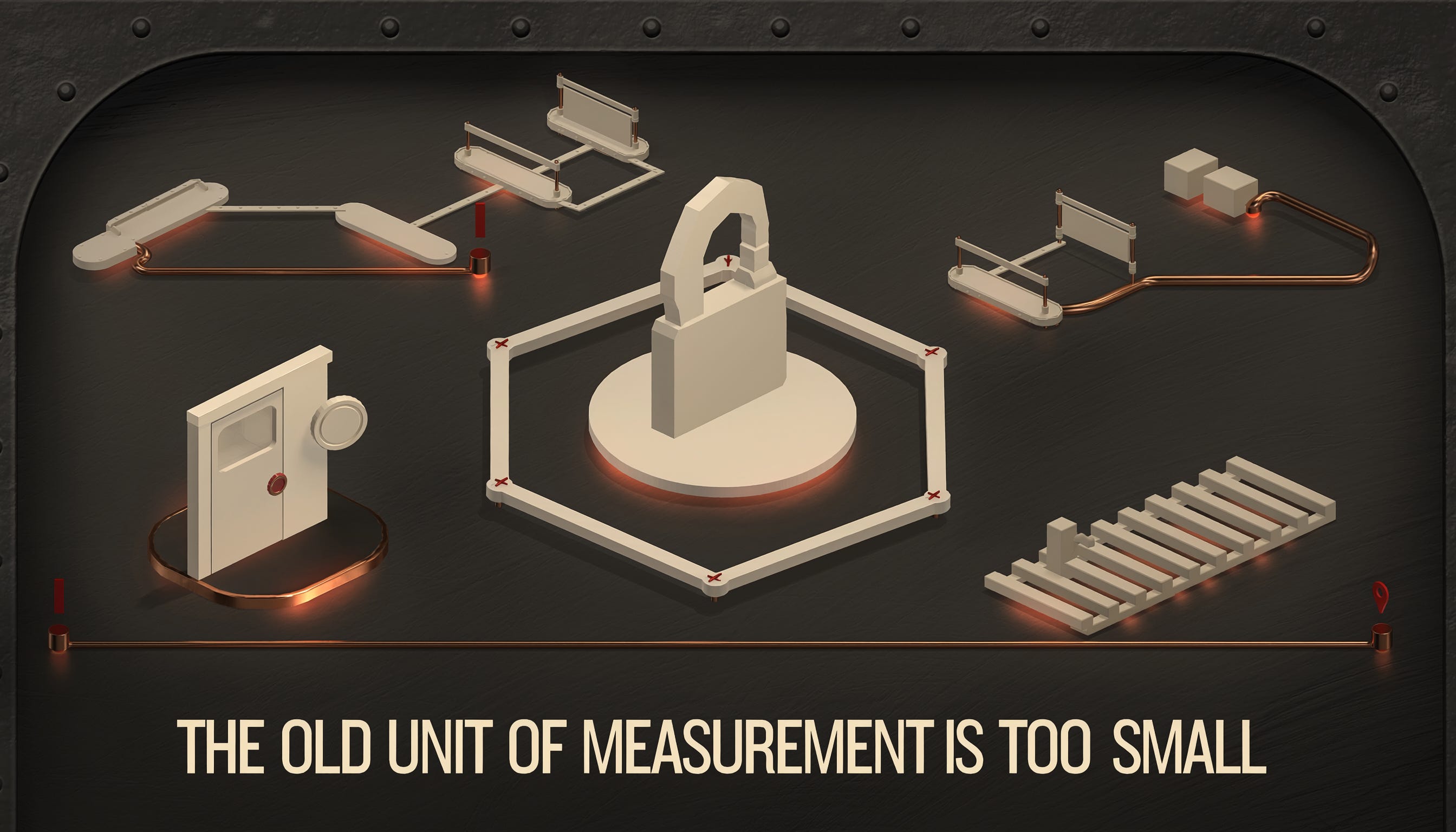
The old unit of measurement is too small
These six developments are not six examples of one grand AI theory. They expose six cases where the conventional management object leaves out material information. A CVE record can miss dangerous composed authority. An authorization event can miss an unacceptable trajectory. A login can miss delegated authority. A policy statement can miss enforceable compliance. A purchase order can miss the financing structure supporting demand. A headcount number can miss the condition of the apprenticeship system underneath it.
The common pattern only becomes visible after looking at those failures together. AI is moving deeper into the connective tissue of organizations, where authority changes hands, workflows accumulate state, capital alters incentives, regulation creates obligations, and people learn how to become capable. The model remains important, but the model is no longer the whole operational boundary.
The better questions now sit one layer away. Who owns the state that emerges after the model acts. Who can see it. Who can intervene. What evidence survives the handoff. What capability is being consumed faster than it is replenished. Who pays when the abstraction everyone was measuring turns out not to contain the actual risk.
That is where Under the Radar should keep looking, because once AI becomes infrastructure, its consequential failures will increasingly look less like exotic AI failures and more like ordinary systems failures operating at a scale, speed, and delegation depth our existing controls were not designed to see.
Artifacts are cheap, judgement is scarce.
Per ignem, veritas.